
A wallet can warn that a transaction looks dangerous and still be unable to guarantee what will happen next. That is the counterintuitive reality of transaction simulation: it can make a complex DeFi action easier to inspect, but it is not a promise of safety. The same distinction matters for cross-chain swaps, where one apparent “swap” may involve several steps across separate networks. Rabby’s appeal is not that it removes those underlying risks; it is that it can help users see more of the transaction before approving it. To use that help well, it pays to understand what a wallet can simulate, what it cannot control, and why the history of crypto wallets has made these questions more important.
Early wallets were mostly signing tools: they connected an account to a network and asked the user to approve a transaction. As DeFi grew, that simple model became harder to live with. Users now encounter token approvals, smart-contract interactions, bridges, and routing services, often through a single interface. A modern wallet therefore needs to do more than hold keys. It must help translate an opaque request into an intelligible decision—without implying that a readable preview can eliminate protocol, market, or user risk.
Misconception one: a wallet preview is a guarantee
Transaction simulation means attempting to model or execute a proposed transaction against available blockchain state before it is broadcast. A wallet can use the result to show an expected outcome, such as assets received or a likely failure. This is valuable because a transaction request is not self-explanatory: behind a button may be a contract call with parameters that are difficult to interpret directly.
But a simulation is a forecast under particular conditions, not a binding outcome. Blockchain state can change between preview and execution. Token prices, available liquidity, or a contract’s state may shift; the transaction may be delayed, reordered, or fail for reasons the preview did not capture. Some behavior also depends on external services or multiple transactions that cannot be treated as one perfectly guaranteed event. The practical lesson is not to ignore simulation, but to read it as a useful test: “What does this transaction appear to do now?” rather than “What must happen?”
That distinction is especially important when a wallet flags a transaction as unfamiliar or risky. A warning is a reason to investigate, not proof that an action is malicious. Conversely, an uneventful simulation does not certify a contract or protect against every exploit. Wallet safety features can improve visibility; they do not replace judgment about the site, protocol, token, and transaction purpose.
Why cross-chain swaps are more than swaps
On one network, a token swap generally exchanges one asset for another through a trading venue or a route that combines venues. A cross-chain swap adds a boundary: the assets sit on different blockchains, which do not share one universal transaction state. A service may need to arrange a source-chain action, a bridge or transfer mechanism, and a destination-chain action. The interface can present this as one task, but the underlying process may involve separate systems, timing, fees, and failure points.
This creates a useful mental model: a cross-chain swap is often a coordinated journey, not a single atomic exchange. “Atomic” means all parts either happen together or none do. Across independent networks, that all-or-nothing guarantee is not something a wallet interface can simply provide. Depending on the route, a user may face delays, a destination transaction that needs attention, changing exchange rates, or a service-specific condition. The exact risks differ by route, so a quoted output should be treated as conditional on execution and the route’s terms.
Transaction simulation can help by showing what a proposed step is expected to do and by surfacing suspicious or unexpected effects. Yet it may not fully represent the entire cross-chain journey, particularly if later actions depend on events that have not happened yet. A preview of the source-chain transaction is not necessarily a complete guarantee about the destination-chain result. Before approving, check which network is being used, what asset is being spent, what asset is expected, and whether the interface describes any follow-up step or uncertainty.
What Rabby can help with—and what remains yours to verify
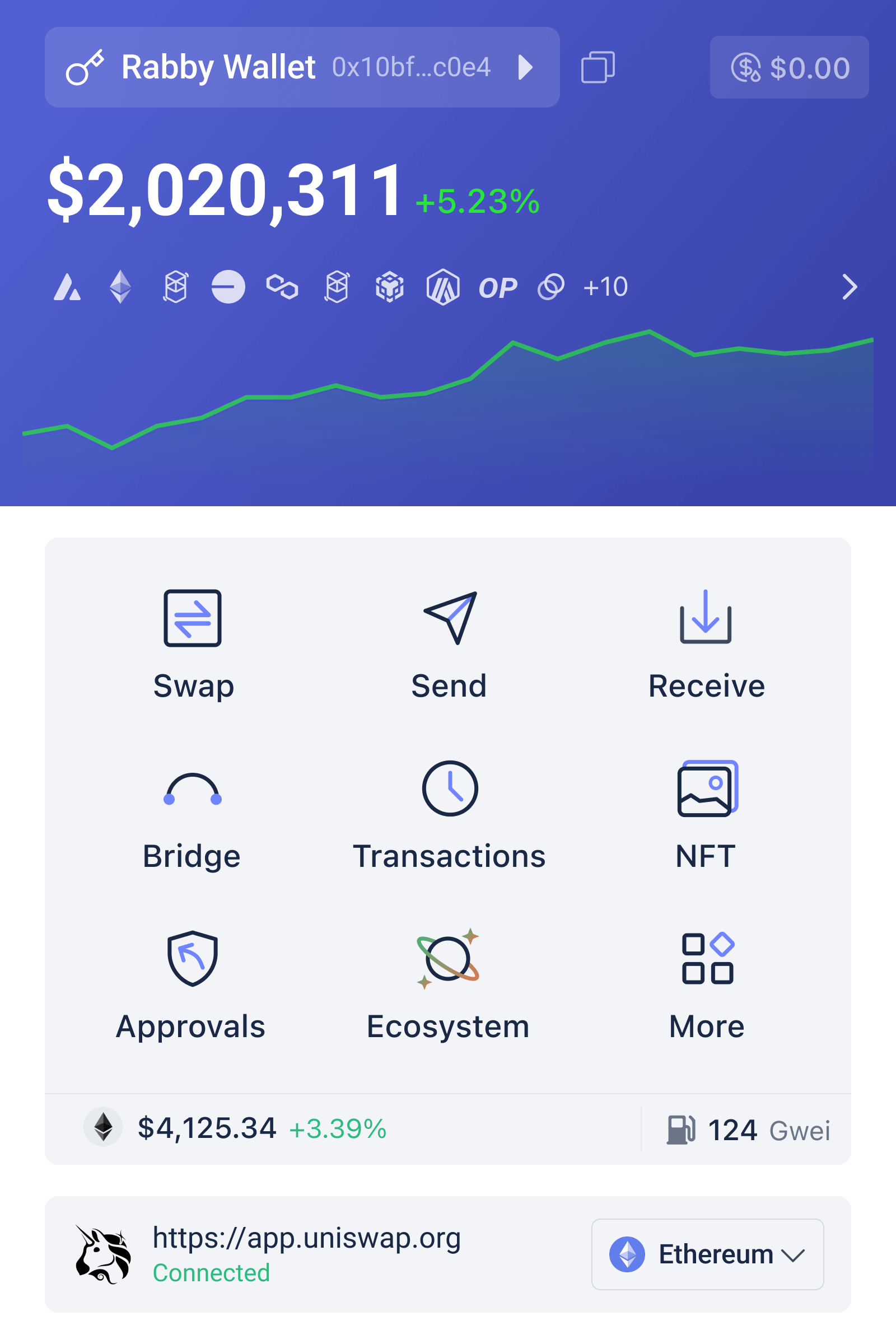
Rabby is a browser wallet designed for interacting with decentralized applications. For a DeFi user, its most useful role is not merely storing an account but providing a clearer checkpoint before signing. A transaction preview can help connect the action on screen to the assets and permissions involved. That matters when a user is moving quickly between applications, networks, and contracts, where familiar-looking buttons can conceal materially different requests.
Still, wallet software is one layer in a larger system. It cannot make a compromised website trustworthy, guarantee a bridge’s solvency or operation, prevent every malicious contract, or ensure that a quoted price remains available. Nor does installing a wallet mean every token or network interaction is automatically supported in the same way. Compatibility and features can change, so users should rely on the current wallet interface and official project information rather than assume a capability from an old guide.
For readers preparing to install the browser extension, use a source you can verify and take care with similarly named extensions and download pages. The rabby wallet download link is a starting point, but it is still sensible to confirm the publisher and browser-store listing before installation. During setup, protect the recovery phrase: anyone who obtains it may be able to control the wallet, and a browser extension cannot reverse an on-chain transfer made by someone with access to the keys.
A practical way to inspect a proposed transaction
Before signing, ask three questions. First: what leaves my control now? Identify the network, token, amount, and any permission being granted. A token approval can authorize a contract to spend tokens later, so it is different from a one-time swap; consider whether the requested scope makes sense for the action. Second: what do I expect to receive, and under what conditions? Compare the displayed output with the route, fees, and any stated slippage or execution caveats. Third: what could happen after this step? For a cross-chain action, look for a destination step, a waiting period, or an outcome that depends on another service.
If the preview and your intended action do not match, stop and investigate rather than signing to see what happens. If a transaction fails simulation, that is useful information, but not necessarily a complete diagnosis; network conditions or contract state may be involved. If it passes, that is evidence about the modeled execution, not a general safety endorsement. This “intent, effects, dependencies” check is portable: it works whether the user is swapping on one network, approving a token, or initiating a cross-chain route.
US users should also keep the practical boundaries in view. Wallet software is not a bank account, and transactions generally do not come with a conventional chargeback process. Tax treatment can depend on the facts and applicable rules, so a wallet’s transaction display should not be mistaken for tax advice or a complete record of cost basis. For meaningful activity, retain records and consult a qualified professional when needed.
What to watch as wallet previews evolve
Wallets are moving toward a role closer to transaction interpreters: not just asking for a signature, but explaining the likely consequences of one. The direction is useful, especially as DeFi interfaces bundle more steps into fewer clicks. The key test is whether previews help users understand dependencies and uncertainty—not merely whether they look reassuring.
A recent Chrome Web Store disclosure dated September 1, 2026, says Rabby Wallet has disclosed information about its data collection and use, with further details in the developer’s privacy policy. That notice is relevant to the browser-extension trust decision, but the available information here does not specify what data is handled or how it is used. Read the current privacy policy and store disclosure before installing if data practices matter to you; do not infer details that the summary does not provide.
As simulation and cross-chain routing develop, the most meaningful improvement would be clearer explanations of what is modeled, what remains dependent on external systems, and what the user may need to do if a later step does not complete as expected. Whether wallets deliver that clarity is an open product question. The durable user advantage is already within reach: treat a preview as an informative snapshot, and treat every signature as a decision about a specific action—not as a blanket vote of confidence in the whole route.
Frequently asked questions
Does Rabby transaction simulation guarantee that a swap is safe?
No. Simulation can help show the likely effects of a transaction under modeled conditions, but it cannot guarantee future execution, certify a contract, or eliminate risks from changing network state, malicious sites, or external services.
Why can a cross-chain swap take longer or produce a different result than expected?
It may involve actions on separate networks and depend on a route, bridge, liquidity, and later execution. Those systems do not necessarily behave like one atomic transaction, so timing, fees, and final output can depend on conditions at execution.
What should I check before installing a browser wallet?
Verify the extension publisher and listing, review the current privacy disclosure, and protect the recovery phrase. Never enter that phrase into an unfamiliar website or share it with someone claiming to provide support.