
You are trying to move a stablecoin from one blockchain to another before a market window closes. The swap screen looks familiar, the quoted fee seems acceptable, and the browser wallet asks you to approve a token. Then a second transaction appears. Perhaps a bridge is involved as well. What looked like one trade is actually a chain of permissions, contracts, and settlement steps—and a mistake in any one of them can expose more funds than intended.
This is why cross-chain swaps should not be understood merely as “exchanging one token for another.” They are a coordination problem across networks with different balances, contracts, fees, and finality assumptions. A wallet such as the Rabby browser extension can make that process easier to inspect, but it cannot remove the underlying risks. The useful mental model is not convenience versus inconvenience. It is visibility versus blind signing.
What a cross-chain swap actually involves
On a single blockchain, a token swap generally means sending a transaction to a decentralized exchange contract. That contract may use an automated market maker, an order book, or an aggregator that searches several liquidity venues. The user gives the contract permission to spend a token and, if the transaction succeeds, receives another asset.
A cross-chain swap adds another layer. The source asset must be exchanged, locked, burned, or otherwise represented on one network, while an asset is released, minted, or acquired on another. Depending on the design, this may involve a bridge, a liquidity network, a messaging system, or an intermediary that executes the destination-side trade. The user interface may compress these actions into one workflow, but the security assumptions remain separate.
That distinction matters because “cross-chain” is not a single technical category. A bridge that locks an asset and issues a representation has different risks from a liquidity provider that pays out an existing asset on the destination chain. The first depends heavily on custody and message verification; the second may depend more on available liquidity, pricing, and the solvency or execution behavior of the intermediary. A wallet can display the transaction, but it does not guarantee the bridge’s honesty, liquidity, or recoverability.
For a US-based DeFi user, practical details matter too. Network fees may be paid in different native tokens, transaction timing can vary, and a destination asset may create tax-record complexity even when the user thinks of the activity as a simple transfer. A wallet should help with operational clarity, not substitute for understanding the legal, tax, or protocol-specific consequences of a transaction.
Token approvals are permissions, not payments
The most commonly misunderstood step is token approval. Many tokens follow a standard pattern in which the token contract records that another contract—usually a decentralized exchange or router—may spend tokens on the holder’s behalf. The approval itself does not necessarily transfer the entire balance. It changes a permission setting that a later transaction can use.
Suppose you approve a router to spend 1,000 units of a stablecoin. The swap transaction may spend only 100 units, but the remaining allowance can persist. If the router is later compromised, upgraded in an unsafe way, or called through a malicious interface, that standing permission may become relevant. The precise risk depends on the token contract, the approved spender, the allowance amount, and the surrounding application. Still, the principle is general: an approval expands what a contract is authorized to do.
This creates a useful distinction between transaction risk and permission risk. Transaction risk concerns what the current call will do. Permission risk concerns what the approved contract may be able to do afterward. Users often inspect the first and ignore the second. A wallet that highlights approvals, spender addresses, and token amounts can therefore improve decision quality even when it cannot judge every contract’s intentions.
Unlimited approvals are convenient because they avoid repeated approval transactions, but convenience is purchased with a larger exposure window. Exact approvals reduce the authorized amount, yet they may require more transactions and can be awkward when a protocol needs a slightly different amount because of slippage or routing. Neither approach is universally correct. For a short-lived interaction with an unfamiliar application, a limited approval is usually easier to justify. For a well-understood, frequently used protocol, some users may accept a broader allowance while still monitoring it.
Approval management as a risk budget
A practical way to think about approvals is as a risk budget. The question is not simply, “Do I trust this website?” It is, “How much authority am I granting, to which address, for how long, and against which wallet balance?” A dedicated DeFi wallet with only the funds needed for a transaction can reduce the consequences of a bad approval. A long-term savings wallet should generally not be treated as a routine testing environment.
Revoking an approval can reduce future exposure, but it is not an undo button. It requires another on-chain transaction, costs a network fee, and cannot reverse a transfer that already occurred. It also does not prove that a protocol is safe; it merely changes one permission after the fact. Users should verify the spender address rather than relying only on a familiar application name.
How Rabby can help—and where it stops
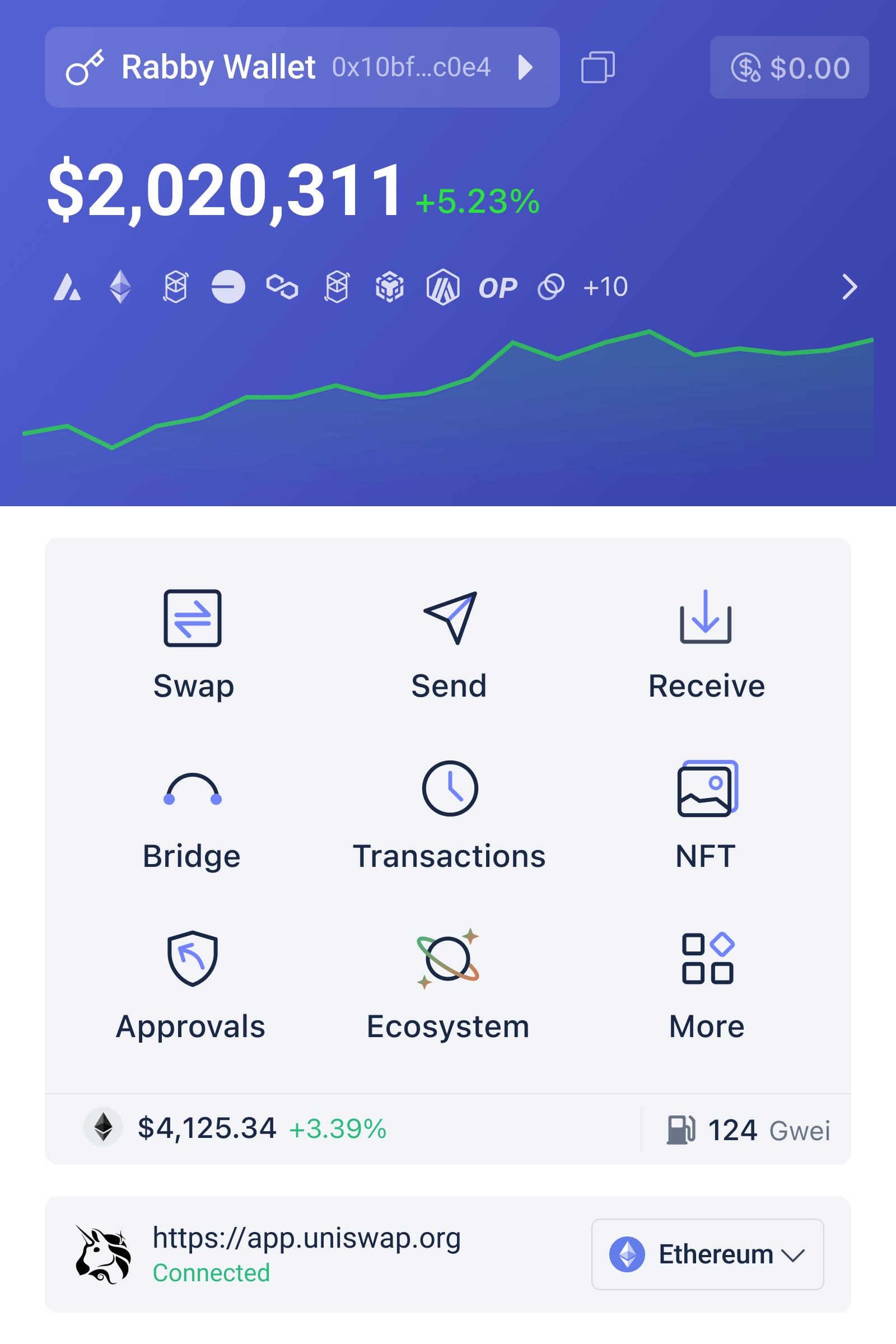
A browser wallet extension sits between the user and decentralized applications. Its most valuable role is often not holding assets but translating a proposed transaction into information a person can evaluate: the network, contract interaction, token movement, approval target, and potential simulation result where available. That is particularly useful when a cross-chain workflow contains several calls that a generic signing prompt may present too tersely.
Users who want to install the extension should begin with the official distribution path and verify the publisher, permissions, and browser prompts before importing or creating a wallet. A starting point for that process is the rabby extension download. The link itself is not a substitute for verification: users should avoid look-alike domains, unsolicited search advertisements, and requests to reveal a seed phrase. No legitimate wallet installation requires the secret recovery phrase to be entered into a website for “activation.”
Recent information shown in the Chrome Web Store disclosure indicates that Rabby has described how it handles collected data and directs users to a developer privacy policy for more detail. That is useful context, but it should be read precisely. A privacy disclosure explains stated data practices; it does not establish that every connected decentralized application is safe, nor does it eliminate browser, device, phishing, or network risks. Wallet privacy and transaction security are related but different questions.
Transaction simulation and warnings, when available, should be treated as evidence rather than an oracle. Simulation may fail, become stale, or omit risks created by an application’s off-chain behavior. A transaction can also be technically valid while economically poor—for example, because liquidity is thin, the destination token is difficult to sell, or a bridge route carries an unfavorable spread. The wallet can improve visibility, but the user still has to interpret the result.
Three approaches to moving assets across chains
There is no universally best cross-chain method. A native bridge may preserve a familiar asset representation and offer direct settlement, but it can concentrate risk in custodial contracts, validators, or message verification. A liquidity-based cross-chain service may provide faster user experience and avoid waiting for a canonical representation, but its price depends on destination liquidity and the service’s ability to fulfill the transfer. A centralized exchange can be operationally simple and may provide deep liquidity, yet it introduces account custody, withdrawal controls, identity requirements, and counterparty exposure.
For a small, time-sensitive transfer, a centralized venue may be the least complicated route if the user already accepts its custody model. For an on-chain strategy requiring composability, a decentralized route may be preferable despite greater contract complexity. A native bridge may make sense where the asset and network relationship are well established, but “official” or “canonical” does not mean risk-free. The correct comparison is not fastest against slowest. It is which trust assumptions the user is prepared to accept.
Fees also need to be separated into categories. There may be a source-chain gas fee, a swap fee, a bridge or routing fee, a destination-chain gas requirement, and price impact caused by liquidity. A quote that displays one headline number may conceal some of these components. Before confirming, check what arrives on the destination chain, whether the recipient can use it immediately, and whether a small amount of native gas is needed for the next transaction.
A repeatable review process before signing
Before approving a cross-chain swap, identify the source network, destination network, asset being spent, asset expected, and address that will receive funds. Confirm that the destination token is the intended representation—not merely a similarly named token—and inspect the minimum received amount or slippage limit. If the route includes an approval, ask whether the amount is exact or unlimited and whether the spender is the contract you expected.
Then consider the failure path. What happens if the source transaction succeeds but the destination transaction is delayed? Is there a status page or recovery process? Can the destination asset be redeemed, sold, or bridged again? These questions are more important than a polished interface because cross-chain systems can fail asymmetrically: one side may settle while the other waits for a message, liquidity, or manual intervention.
Finally, separate a test transaction from a normal transaction. A small test can confirm that the address, network, token representation, and receiving path are correct. It cannot prove that a contract will remain safe or that a bridge will perform reliably in all conditions. For larger amounts, consider splitting execution and keeping long-term holdings away from the wallet used for experimental applications.
What to watch as wallet tooling evolves
The next meaningful improvement in wallet security is likely to be better translation of technical permissions into economic consequences. Users need to know not only that a contract will call a function, but also which assets could move, under what conditions, and for how long an approval remains active. Such tooling would not eliminate social engineering or flawed protocols, but it could reduce the gap between what a transaction does in code and what a person believes it does.
That outcome is conditional. It depends on accurate contract metadata, reliable simulation, interfaces that do not overwhelm users with warnings, and applications that expose enough information to analyze. If alerts become too frequent or vague, users may learn to dismiss them. The signal must remain specific: this spender can move this token, this route changes the asset representation, and this action cannot be reversed after settlement.
Frequently asked questions
Does approving a token automatically send my funds?
Usually, an approval changes an allowance that lets a specified contract spend a token later. It is not necessarily the transfer itself, but it is still a meaningful permission. Review the spender and allowance amount, and remember that approval transactions consume gas.
Is Rabby enough to make cross-chain swaps safe?
No. A wallet can improve transaction visibility, provide warnings, and help users review permissions, but it cannot guarantee the security of a bridge, decentralized exchange, token contract, browser, device, or connected application. Safety remains a layered process.
Should I revoke every token approval after using DeFi?
Not automatically. Revocation reduces standing permission but costs another transaction and does not undo completed transfers. Prioritize unfamiliar, high-value, or no-longer-used spenders, and balance the additional fee against the exposure being reduced.
The central lesson is simple but easy to overlook: a cross-chain swap is not one action, and a token approval is not harmless housekeeping. Treat each route as a collection of trust assumptions, permissions, and possible failure states. Rabby can make those layers more visible during installation and use, but the final security boundary is still the user who reads before signing.